
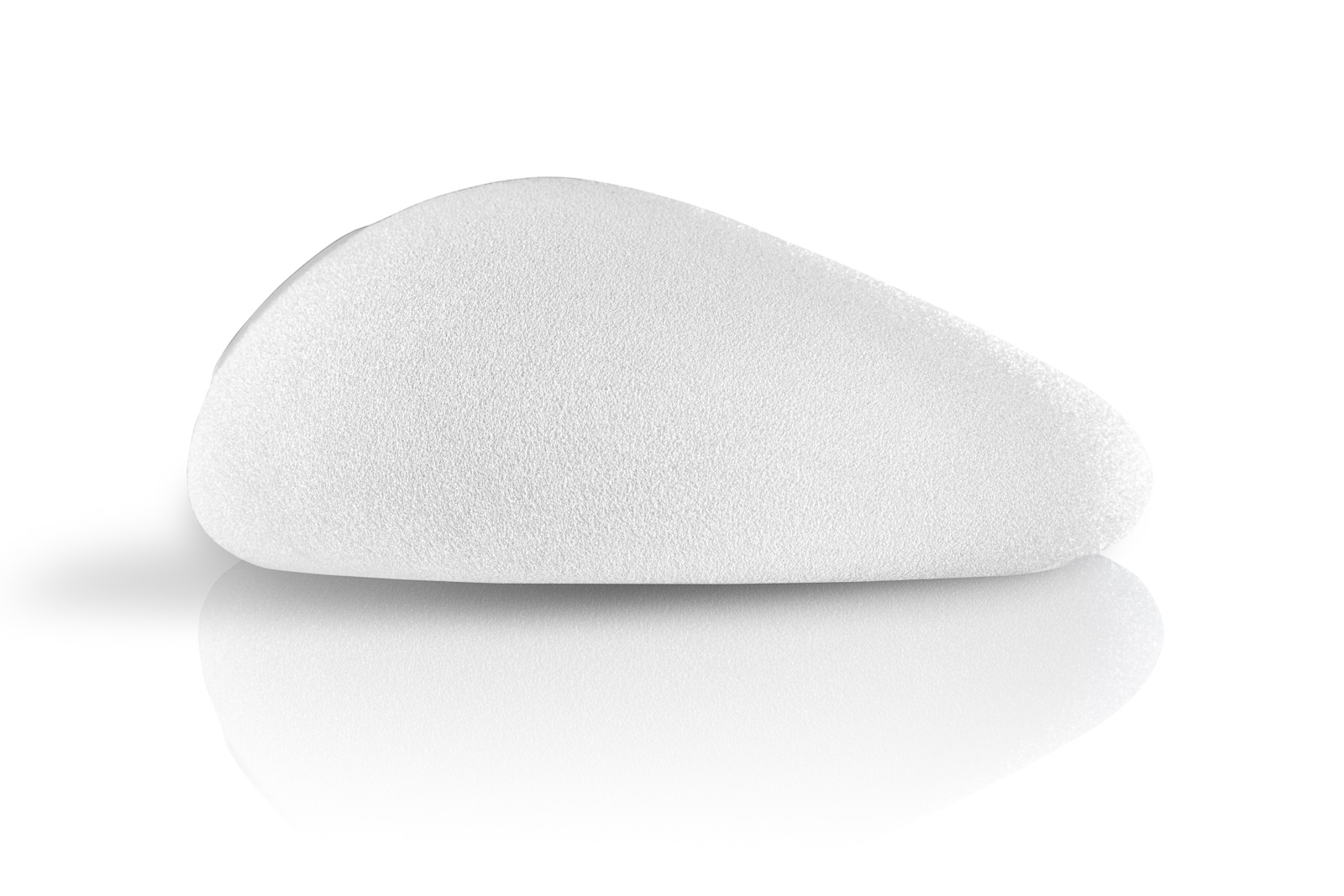
Natural-Looking Breast Augmentation with Silicone Implants by Dr. Robert Lee Steely
One of the most common misconceptions patients bring into a breast augmentation consultation is that implant size is the primary variable. In reality, size is only part of the equation.
The shape, projection, and type of implant — and how those factors interact with your specific chest dimensions, tissue characteristics, and aesthetic goals — have just as much influence on your final result.
At Steely Plastic Surgery in Houston, implant selection is treated as a precise, individualized process. Dr. Steely takes detailed measurements and evaluates each patient’s anatomy before making any implant recommendations, as the same implant can produce very different outcomes depending on the patient it is placed.
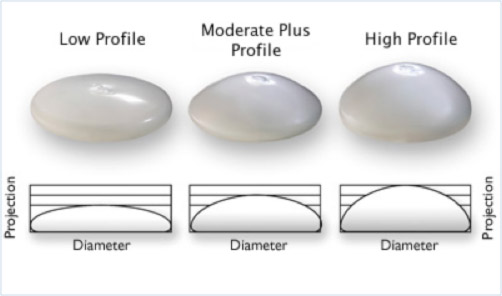
SMOOTH ROUND SILICONE GEL
- ^Filled with soft, cohesive silicone gel
- ^Available in multiple profiles (moderate, moderate plus, high, ultra-high)
- ^Approved for cosmetic use since 2006
- ^Commonly used for balanced, natural-looking enhancement
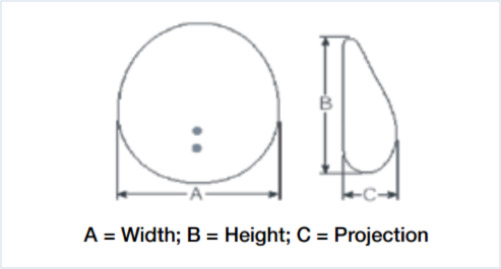
SHAPED SILICONE GEL
- ^Also called “teardrop” or “gummy bear” implants
- ^Firmer, form-stable gel holds the anatomical shape
- ^Tapered design mimics the natural slope of the breast
- ^Textured surface helps reduce the risk of implant rotation
- ^FDA-approved in 2012–2013
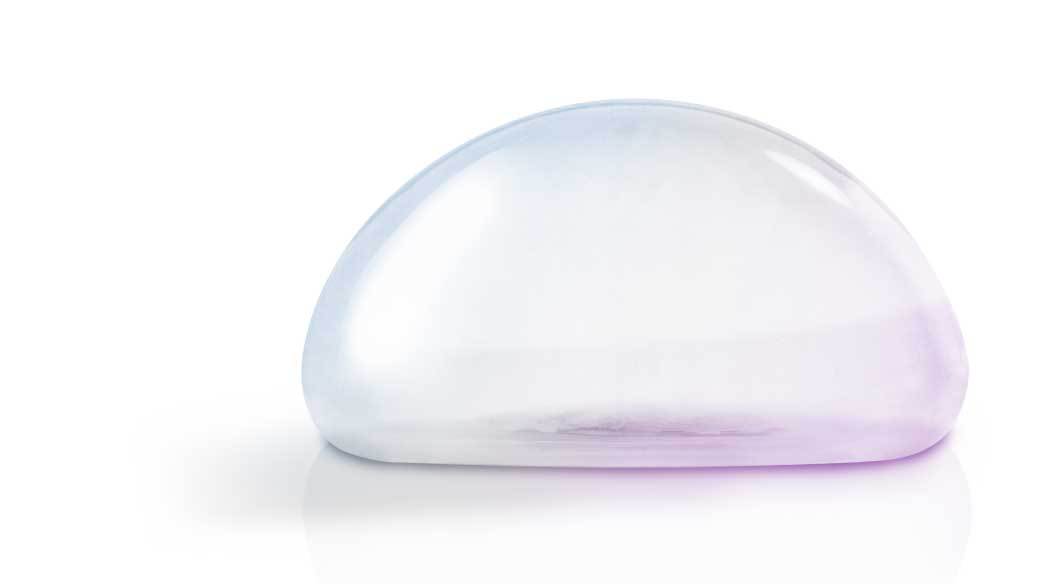
MemoryGel® Xtra Implants
- ^Introduced in 2018 as an advanced version of the original MemoryGel® line
- ^Designed for patients seeking more projection and upper pole volume
- ^Available in Moderate Plus, Moderate High, and High Profile options
- ^Maintains a soft texture while providing additional structure
What Are Silicone Breast Implants?
Silicone breast implants are FDA-approved devices consisting of a durable silicone outer shell filled with a cohesive silicone gel. The gel is engineered to move and compress in a way that closely approximates the feel of natural breast tissue, which is one of the primary reasons silicone implants remain among the most widely selected options in cosmetic breast surgery.
Because silicone implants are pre-filled before insertion, they require slightly larger incisions than saline implants, which are filled after placement. They are FDA-approved for breast augmentation in patients aged 22 and older and are available across a wide range of sizes and projection profiles to accommodate different body types and aesthetic goals.
Modern cohesive gel technology also helps silicone implants maintain their structural integrity over time, supporting results that hold their shape without feeling stiff or overly firm.
Silicone Implant Profiles: Why Shape Matters as Much as Size
Silicone breast implants come in distinct projection profiles that distribute volume differently across the implant. Understanding how profiles work is central to understanding why two patients with the same implant volume can end up with noticeably different results.
A moderate profile implant distributes volume more broadly across the base of the implant, producing a fuller, wider appearance with less forward projection. A high-profile implant concentrates more of that same volume outward from the chest wall, creating more pronounced forward projection with a narrower base width. A moderate plus profile sits between the two, offering a balance of lateral fill and outward projection.
At Steely Plastic Surgery, Dr. Steely gives significant attention to implant profile selection during the planning process. A patient with a narrower chest width may achieve better proportional balance with a high-profile implant.
In contrast, a patient with broader chest dimensions may be better served by a moderate or moderate-plus option. Getting this right — not just the size, but the shape — is a defining factor in producing results that look natural and complement the patient’s frame long-term.
Why Patients Choose Silicone Implants
Natural Feel
Cohesive silicone gel closely mimics the feel of natural breast tissue, making it a preferred choice for patients who prioritize how their results feel, not just how they look.
Smoother Contours
Patients with less existing breast tissue may be more prone to visible implant edges or surface irregularity. Silicone implants tend to produce smoother transitions and more seamless contours in these patients compared to saline.
Profile Versatility
The availability of multiple projection profiles gives surgeons meaningful flexibility to tailor results to a patient’s chest width, desired fullness, and proportional goals rather than relying on size alone.
Long-Term Shape Retention
Modern cohesive gel implants are designed to maintain their structure over time, supporting durable results without significant changes in shape as the implants age.
Subtle, Integrated Results
For patients seeking enhancement that reads as natural rather than augmented, silicone implants often integrate more seamlessly with existing breast tissue, particularly in patients with thinner coverage.
Silicone vs. Saline Implants
Both implant types are FDA-approved and capable of producing excellent breast augmentation outcomes. The decision between them comes down to anatomy, age, and individual priorities.
Silicone implants are generally favored for their softer feel and smoother contour, particularly in patients with limited natural tissue. However, because they are pre-filled, they require slightly larger incisions and are only FDA-approved for patients aged 22 and older. Saline implants can be placed in patients as young as 18 and are inserted through slightly smaller incisions since they are filled after placement.
The most clinically significant difference between the two involves how ruptures present.
A saline rupture is typically self-evident: The implant deflates, and volume loss becomes visible relatively quickly. A silicone rupture, by contrast, may be silent. The cohesive gel often remains contained within the implant shell or surrounding tissue, making imaging necessary to detect it.
For this reason, periodic MRI or ultrasound monitoring is generally recommended for patients with silicone implants. Dr. Steely discusses both options in detail during consultations at his Houston practice, helping patients understand the real tradeoffs rather than defaulting to one implant type without context.
Who Is a Good Candidate for Silicone Implants?
Silicone implants tend to be a strong fit for patients who are age 22 or older, have limited natural breast tissue, and are seeking results that feel and move as naturally as possible. They are also well-suited for patients who want meaningful profile customization, particularly those whose chest dimensions make implant shape as important a consideration as implant size.
Candidates should be in good overall health, non-smokers or willing to stop smoking before surgery, and prepared to commit to the implant monitoring recommendations that accompany silicone implants over time.
During your consultation with Dr. Steely in Houston, he will take precise measurements of your chest wall, evaluate your existing breast tissue, and discuss which implant type and profile best support the outcome you are looking for.
Silicone Breast Implant FAQs
Why does implant profile matter for silicone implants?
The implant profile determines how volume is distributed, specifically outward projection versus lateral width. Choosing the right profile for your chest dimensions is just as important as choosing the right size, and it significantly influences how proportionate and natural your results look.
Do silicone implants require ongoing monitoring?
Yes. Because silicone ruptures can be silent and may not produce visible symptoms, the FDA recommends periodic MRI or ultrasound imaging after augmentation to evaluate implant integrity over time.
Will silicone implants feel different from natural breast tissue?
Many patients find that silicone implants closely approximate the feel of natural breast tissue, particularly when placed beneath the muscle with adequate tissue coverage. The degree of naturalness depends on implant placement, size, and the patient’s existing anatomy.
Are silicone breast implants safe?
Yes. FDA-approved silicone breast implants have been extensively studied and carry a well-documented safety record. Dr. Steely will walk you through the current safety data and monitoring recommendations during your consultation.
How long do silicone implants last?
Silicone implants are not considered lifetime devices. Many patients maintain their results for 10 to 20 years, though implant replacement or revision may eventually become necessary depending on how the implants age and any changes to the surrounding tissue.
Dr. Steely’s Approach to Silicone Breast Implant Surgery
Dr. Robert Lee Steely is a Houston plastic surgeon dual board-certified by the American Board of Plastic Surgery and the American Board of Surgery. He earned his medical degree from the University of Texas at Galveston. Furthermore, he completed both his General Surgery and Plastic Surgery residencies at St. Joseph Hospital in Houston, where he also received advanced training in microsurgery.
His practice is devoted exclusively to cosmetic surgery, which matters when it comes to breast augmentation. Because Dr. Steely performs 100% cosmetic surgery and personally performs every aspect of each procedure, his implant selection process has been refined through years of concentrated, hands-on experience.
For silicone implants specifically, Dr. Steely evaluates the chest wall width and the distance between the breasts. He also checks skin elasticity, existing tissue thickness, and the patient’s desired level of fullness before selecting both the implant size and the appropriate projection profile. This distinguishes our work from results that look proportionate and natural from one that simply looks augmented.
Patients considering silicone breast implants in Houston will have a minimum of two pre-surgical visits with Dr. Steely before any decisions are finalized.
Schedule a Consultation at Steely Plastic Surgery
If you are considering silicone breast implants in Houston, contact Steely Plastic Surgery today to schedule your consultation with Dr. Steely. His Upper Kirby practice serves patients throughout the greater Houston area.